The Rich History of Trust
The beautiful building that houses Trust has a long, illustrious, and occasionally violent history.
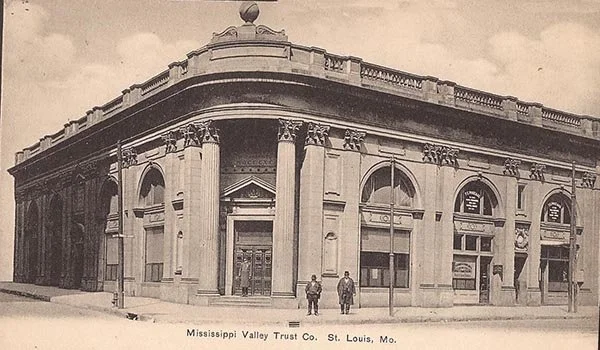
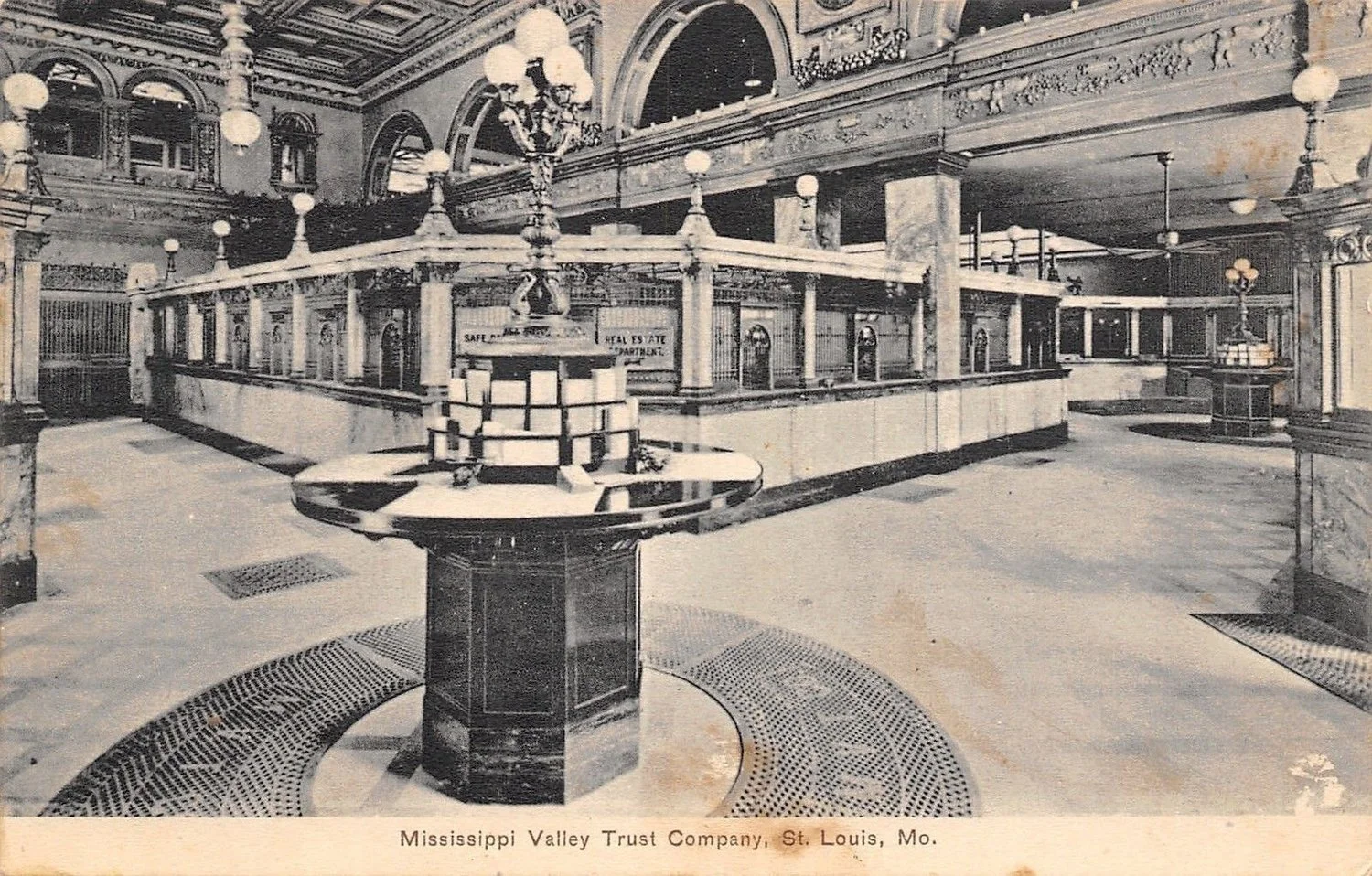
Built in 1896 by the newly formed Mississippi Valley Trust Company, 401 Pine Street was designed by the team of Eames and Young in the Parisian Beaux-Arts style.
From the beginning, the Trust Company made a splash in St. Louis. Less than 10 years after its opening, at the behest of its director David R. Francis, the Trust Company led the financing of the 1904 World’s Fair. Flush from that success, the Trust Company then expanded to the building next door.
But shortly thereafter, disaster struck. Starting in the prohibition era, the Trust Company was hit by an escalating series of bank robberies, which damaged both the finances and reputation of the bank. According to contemporaneous records uncovered in city archives, the robbers came through windows on the back alley of the building, so the Trust Company bricked over the windows to prevent further theft. Those windows remain bricked over to this day
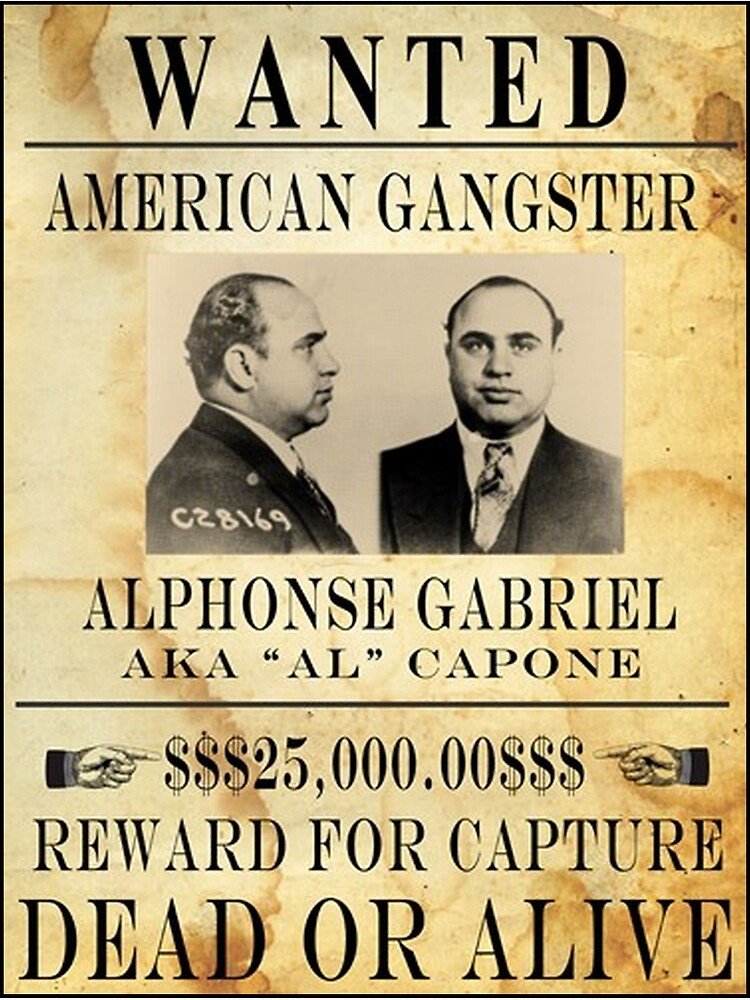
Though largely unsubstantiated, the prevailing sentiment among St. Louis law enforcement professionals and the secret service was that the robberies were masterminded by associates of Al Capone out of Chicago, as punishment for the Trust Company’s refusal to aid Capone’s organization in the laundering of illicit funds.
Why would the Capone organization think that a small, prestigious bank from St. Louis would agree to launder money in the first place? That is where the story gets more interesting. According to rumor, starting in 1921, the Trust Company wasn’t just a bank — its basement also housed one of the city’s most popular speakeasies. And that speakeasy was supplied with alcohol by the Capone organization. It seems that Capone felt the Trust Company, as a bank, should understand the adage “in for a penny, in for a pound.”